

PTP #1 — Two Days, Two Books, and Typesetting Madness
Path to Publication with Atticus.io

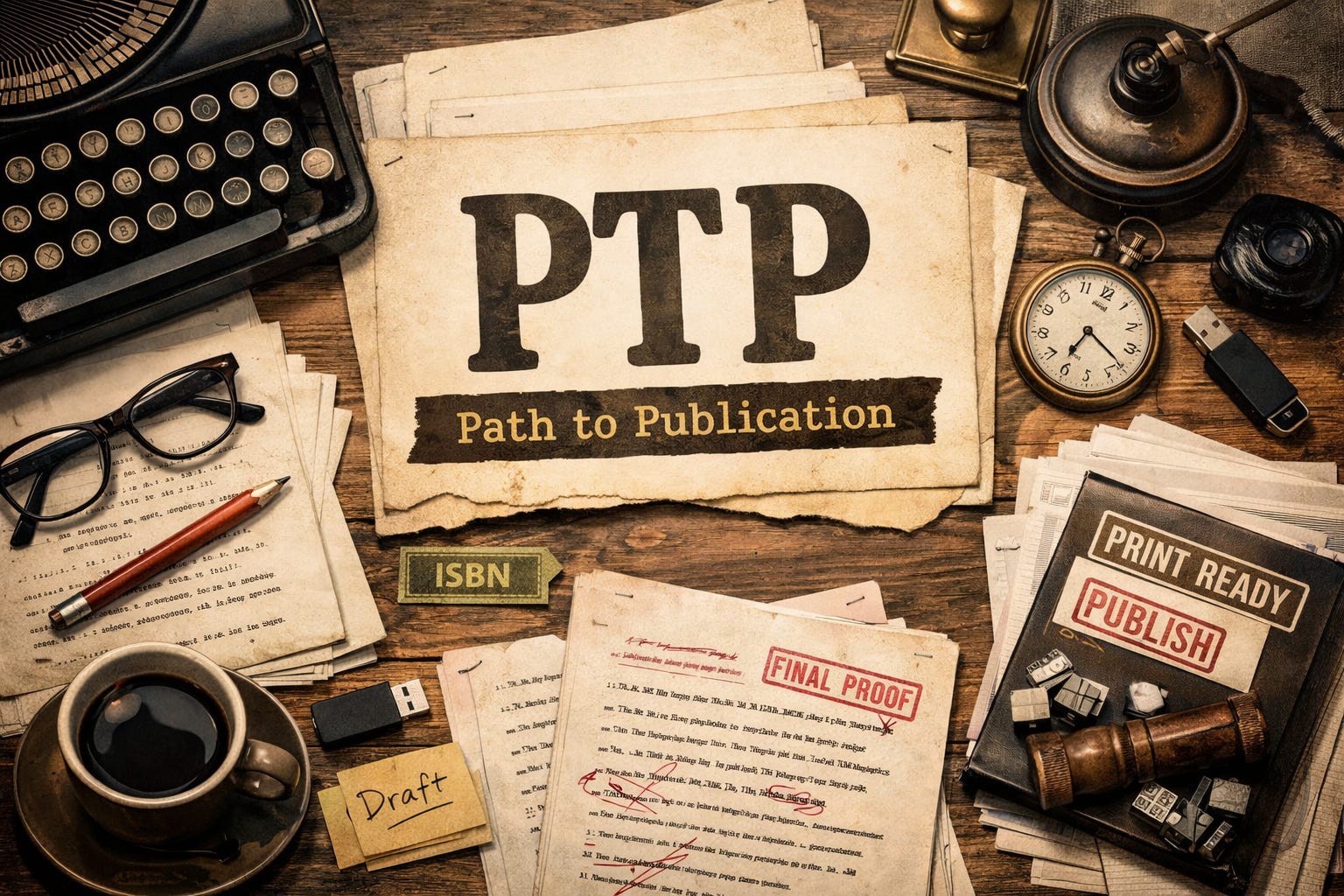
No, I’m not self‑publishing — at least not yet. This was about curiosity. I wanted to understand what the self‑pub side actually looks like. The more you know 🌠
I spent the last two days inside Atticus typesetting two manuscripts: The Void Protocol and The Peripheral. It’s the kind of work that looks invisible from the outside but changes everything on the inside. Once a story has margins, headers, and a rhythm on the page, it stops feeling like a draft and starts feeling like a book. It also gave me a new appreciation for small presses, independent publishers, and self‑publishers who do this every day.
Onto the books, shall we?
The Void Protocol
This novella follows an investigative journalist who’s contractually obligated to revisit a serial killer at an ADMAX facility. His assignment: turn the killer’s obsessively staged crime scenes into a DIY‑style book. The narrative unfolds through case notes, interview transcripts, journal entries, and an editor’s disclaimer. It’s a story about arrogance, integrity, and the slow collapse of both.
It’s conceptual in its cross‑genre upmarket presentation, while still accessible to true‑crime, psychological‑horror, suspense, and thriller readers. It’s meta with meta.
The Peripheral
This novella tracks a welder’s descent after a flash burn at work. Jake begins seeing shadows at the edge of his vision — the same “peripheral” that gives this publication its name. If you’ve seen the logo with the giant eye, look closer and you’ll notice the shadows. They linger, then intrude, then demand a confrontation he’s not prepared for. It’s a story about injury, intrusion, and the thin membrane between the real and the unreal.
This one was a joy to write, and seeing it laid out in both typeset and digital formats makes me want to pull the trigger and release it myself.
Why This Work Matters
Typesetting forces decisions: how the text breathes, where the reader pauses, what the eye lands on first. It’s also the moment when a project becomes tangible. These books now exist in a form that could sit on a shelf, which is a strange and grounding feeling.
With Chaos Particle on the horizon, I’m starting to see how these projects might eventually fit together — maybe as a small‑press lineup, maybe as something an agent would recognize on a manuscript wish list. I’m not chasing that yet, but I’m aware of the possibility.
For now, PTP is where I’ll document the steps, the tools, the decisions, and the quiet work that happens before a book meets a reader.
A Major Takeaway
Once I figured things out, I realized that the pre‑print version of a manuscript is simple — almost ugly. Whether you use .docx, .gdoc, or .rtf, the core elements are title, subtitle, subheading, and text. Nothing else. Nothing fancy. Honestly, it’s advantageous to write entirely in Markdown (.md) since this iteration of the web is built on block structure.
I also remembered why I don’t love the tech side anymore. It’s fun to dabble, but if I did this every day — even with AI workflows and optimizations — I’d lose my mind and a significant portion of my day.
Again, shout‑out to the typesetters in small publishing, independent presses, and the indie authors who put in the work before the book with the nice cover and clean, organized text appears in your hands.
Questions, suggestions on what to do next, let me know—seriously.