

Edge of the Dock
A work in progress with a mental health trigger warning.

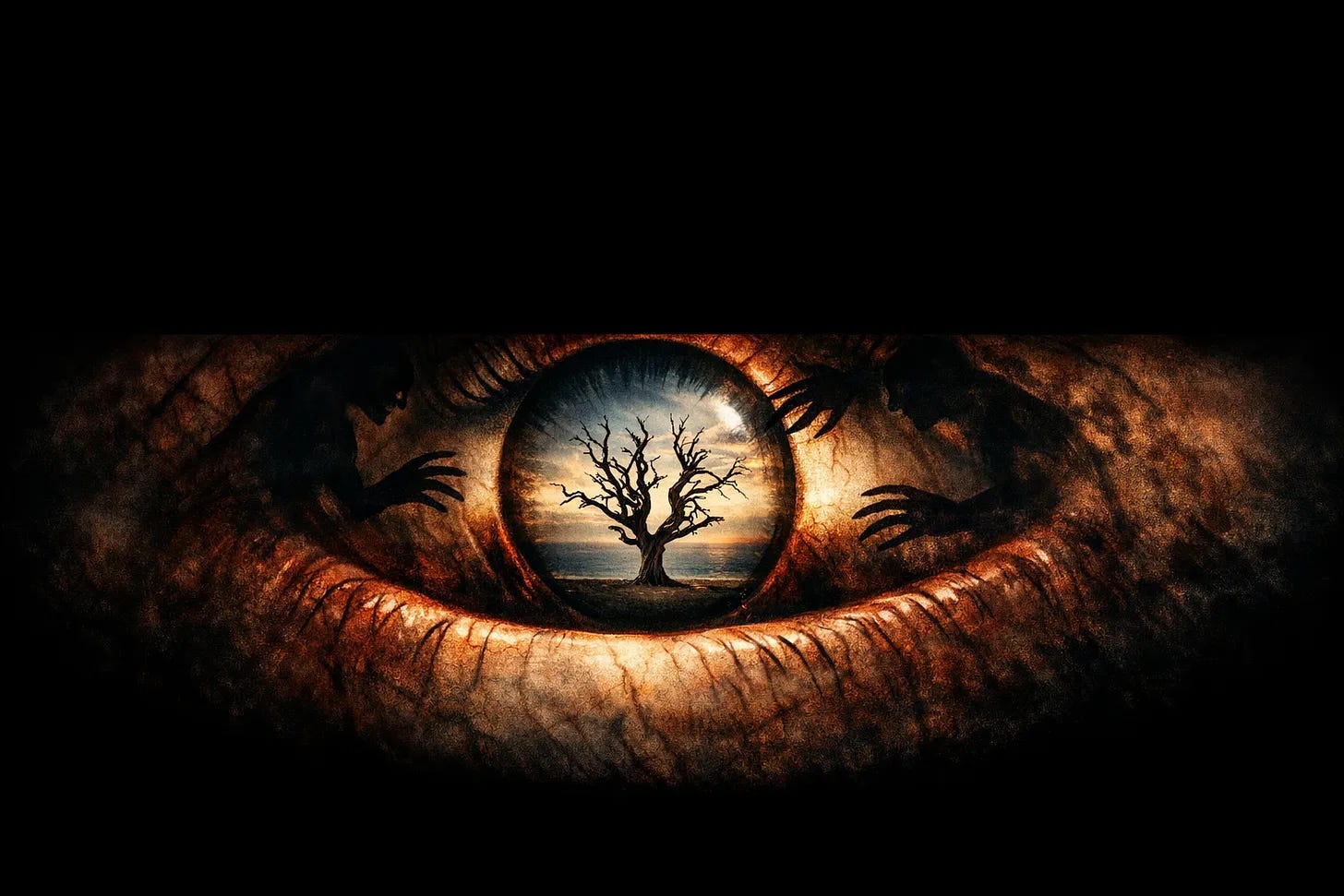
Author’s Note:
Sometimes writing about something in the peripheral edge can’t wait for reflection or for time to pass. It requires immediacy. This piece is just that—written in the immediacy of a feeling and an experience that is a raw reminder of the fragility of the human condition.
Story:
The weathered wooden planks had sagged under his weight as he dangled his legs at the edge of the dock. He plucked a woodchip with his worn fingernail and rolled it between his thumb and forefinger. It was large enough that he was able to bite down on the end with his molars. Weathered salt seeped onto his tongue and the taste reminded him of the churn in his stomach when he thought about how he felt when it came to the silence whenever she came around..
A shadow of a gull with an outstretched wingspan obscured the sun. For a brief moment, the darkness that engulfed him felt liberating–like a reset on life–all the cares disappeared. The coolness that was obscured by the rays of the sun crawled up his arm, down his neck, and through his toes–it was invigorating. He felt alive.
Then the sun returned, and with it came the feelings that brought him to the dock. The waves roared from the horizon, and the whispering water that frothed and bubbled beneath the wooden structure began to meet the incoming water and rolled underneath them to return in the curl of a rising wall of water.
There weren’t many people on the pier. The incoming storm, with its darkened skies with flashes of jagged spears of light, threatened with air that thickened inside lungs. There were a few surfers out to catch the last great surf of the day, but none had noticed him. He could have been fishing or launching fireworks and he would have remained as insignificant as the woodchip that he switched to the other side of his mouth and bit down enough to cause it to split.
As the rush of wind tossed his hair, it felt like dozens of fingers grazing his face. His exposed skin became a glistening sheen of saltwater that left white spots as they dried. He squinted and then spit the mix of collected saliva and salted wood out of the side of his mouth and sighed. He leaned forward, pointing his toes down as the rising tide dared him to sink his feet lower.
And he did. He shifted his hips enough to slide his rear end closer to the edge.
He thought about the ocean water–how it is the source of life. Water, he thought, was all a collective mass of decay, pollution, death. Yet it provides sustenance to those that inhabit it. Water isn’t what he needed. Fire–now that’s a cleanser–It leaves little behind, aside from ash. Water would pull him in, swish him around as he resisted flailing, flooding his lungs until the last air was displaced. Then the bloat, decay, turning into food for the inhabitants–he would still exist as a remnant.
The thought of a campfire that made anything organic disappear and the massive dark stalks of trees in a forest burned barren. A cleanse–in the truest sense–a reset.
He sucked the fraying woodchip dry with a thought of using it as a firestarter. It was desirable, but highly impractical at the moment, so he brought the two pieces out and let them protrude from his lips, held clasped by his front teeth.
The water didn’t blindside him. He watched it churn and surge until it towered higher than his head and washed over him, only to recede thereafter. As the clothes clung to his body and hair flattened against his scalp, clarity emerged.
Not water.
Fire.
He pulled his knees up and propped himself onto his feet when his heels found the wooden surface. He tucked his hands in his front pockets and looked into the storm once more. One palm over a wallet and another over his car keys. The sun was gone, replaced by thunderclouds whose claps rattled his eardrums. He turned and faced the dock entrance. It was a long walk, just enough for him to drag his feet and iron out the details before reaching his car.
The wind challenged him each step, pushing him back, sometimes enough to do so–at least two steps. He squeezed the keys in his pocket and allowed the metal belt clip of his wallet dig into his palm. The pain was real. He felt real. He was determined not to become food for the ocean, even with the wet sand turning on the beach to allow the dry particles to take flight and dig into his uncovered face.
When he reached his car, the door was held down by punches of wind thrusting past his hands. His thumb on the unlock button and the lights blinking in acknowledgement wasn’t enough to dissuade the disdain the wind carried onto him. He reconsidered being devoured. A rotting corpse having sea creatures take bites out of him and making homes in his decaying husk at the bottom of the ocean floor.
He managed to get one good yank of the door handle and slipped the fingers of his other hand between the upper door and the rubber gasket attached to the car. Another determined yank with both hands and the door yielded enough for him to slip inside. The remnants of fast food napkins swirled from the back seat to the front only to die down in the back seat once the door shut. The seatbelt was on, doors locked, car engine running–barely audible over the wind’s gust.
He sat there. Hands on his knees. A slight tremble from the chill he had embraced earlier–this one felt vindictive. Then the rain came down in a sudden gush; for a terrifying moment, he thought the ocean had reached up to drag him down. He stared straight ahead, blinking only when he remembered to and when the car shook as if it was being hit by flocks of angry seagulls. He caught his reflection in the rear view mirror and the raging fire he sought was diminished to a tiny flame flickering at the tip of a dwindling match.
The wind had ceded the battle. The rain laid down its watery spears. The storm moved on.
***
He arrived at the front of his garage door, the car idle; his hand on the remote applying enough pressure to feel like opening it, but not enough to do so. He reflected on the last few hours—the pivot from the urge to drown to the desperate fight to remain alive, all for the sake of burning out in a world that didn’t care if he existed at all. He considered the indifference and insignificance to be numbing and paralyzing. The world was made for doers. He was just a thinker who hadn’t done anything—at least not anything that mattered. The space he occupied in the home was as wide as his elbows when his hands were on his hips. Only using limited food, clothing, and shelter–so not to inconvenience her–the breadwinner of the household. As such, he thought himself to be a burden–a waste of resources–an unwanted and unnecessary thing–of sorts.
Those thoughts cemented themselves when the garage door began to open. As it rose, a cluttered garage was a reminder that he was in a losing battle before entering the house. He didn’t remember pressing the button completely but pulled the car inside nonetheless and closed the garage behind him and shut off the engine.
On a normal day it would take exactly three seconds from the opening of the garage to entering the house. The clock had ticked off forty-five seconds, and the seatbelt had not been unlatched. The convenience light for the garage door turned off and he sat in the dark. This dark was as familiar to him as the darkness he felt when he was inside a well lit house. It matched the silence too–just the appliances–from the hum of the refrigerator to the whirring of the air conditioner blower pushing air through the ducts.
Crying.
He couldn’t cry.
He tried.
On the rare occasions that he could remember crying; he was always alone. It sounded ugly and broken, as if he never learned to cry—or like the last yowls of a dying animal. A good cry might make his stomach feel better and it might make him forget that his body is covered in dried sand and saltwater. He was beyond crying.
There would be questions he couldn’t answer if anyone saw him before he reached the shower upstairs.
She would be upstairs.
***
to be continued.
The Story Behind the Story:
The seed:
I wanted to channel a depressive event into something tangible without being too ‘out-there’ but still letting people into a mind that looks better on the outside than the heart feels on the inside.
There is an existential dread here and I want to follow it and see where it leads. I’m not sure if this will be finished because that’s how these moment work—they come hard and leave you exhausted and when the dust settles—its another collection of hours of living.
I’m fine. I’m here. I’ll be here for a while.
Thanks for reading,
—Daniel
You’ve reached the edge of this story.
If you want to keep exploring the strange, the uncanny, and the almost‑possible, follow the trail below.
Metadata:
Length: 1400
Tone: Depressive
Content Note: Trigger warning: Mental health.
Series: The Peripheral Edge